
Pray for Pope Francis
Scroll down for topics
 100+ Important Documents in United States History
Apostolic Fathers of the Church
Biographies & Writings of Notable Catholics
Catholic News Commentary by Michael Voris, S.T.B.

(Death, Heaven, Purgatory, Hell)
Links to Churches and Religions
Links to Newspapers, Radio and Television
Links to specialized Catholic News services
General Instruction of the Roman Missal
****
****
****
****
Rite of Christian Initiation for Adults

Visits to this site
Staying Power: Abortion Battle May be Won Later Rather than Sooner
CHUCK COLSON
Is it time to give up on our battle to stop the legalized murder of unborn children? After all, Roe v. Wade will have been the "law of the land" for three decades this coming January. Americans are used to it. Isn't it time to move on? No.
|
|
|
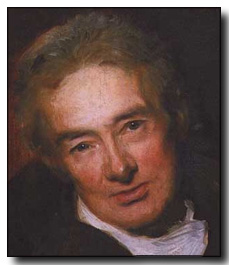
William
Wilberforce (1759-1833)
|
When we get discouraged, it's time to remember the lessons of history,
specifically, the lessons of eighteenth-century England.
It was in 1787 that William Wilberforce, a member of Parliament and a
Christian, decided he would take on one of the most entrenched moral
evils of the day — the British slave trade.
Wilberforce knew from the start that this would be no easy task. The
British empire depended heavily on the slave trade. Wilberforce knew
that in order to succeed, he would have to go about the matter in the
right way.
First he educated himself thoroughly, learning all about slavery and
conditions on slave ships. Then he began working with a small but
influential group of friends who were equally committed to abolition,
known as the Clapham sect. They supervised government inquiries into the
horrors of the slave trade and exposed it. Wilberforce and his allies
then began educating the public about these horrors.
The first victory was a small one, but it proved that the slave industry
was vulnerable. It was a vote in 1788 that restricted the number of
slaves that a ship could be allowed to carry based on the ship's
tonnage.
For the next nineteen years, Wilberforce introduced bills banning the
slave trade. And year after year, his opponents found ways to defeat
them, often playing dirty. As Kevin Belmonte writes in his great new
book, Hero for Humanity, Wilberforce faced "a constant stream of
false accusations and vitriol, death threats, [and] a challenge to a
duel."
But after nearly two decades of hard work, it became clear that the
logjam was breaking. The public would no longer tolerate commerce in
human misery. This change in attitude, writes Belmonte, grew directly
from "the sustained campaign to convince the public of the slave trade's
immorality."
Finally in 1807 “twenty years after Wilberforce began his battle” the
House of Commons voted by an overwhelming majority to abolish the slave
trade.
What is the lesson of Wilberforce's life? Despite repeated losses, he
kept working. By God's grace, his cause made incremental gains. He
didn't demand all or nothing, but eventually carried the day. He then
continued his labors, and eventually slavery was outlawed three days
before he died in 1833.
This is what we have to remember when we become
discouraged over abortion — we're making progress. More college students
now say they're pro-life than pro-abortion. Ultrasound machines in
crisis pregnancy centers are leading more mothers to bear their babies
instead of aborting them. Congress recently passed the Born-Alive
Infants Protection Act, and we've come close to passing a ban on
partial-birth abortion.
Wilberforce understood that while people may ignore the truth, they
still recognize it when they see it. So he looked for ways to remind
people of what they already knew in their hearts.
You and I need to do the same. Gradually, slowly, we're winning the
hearts and minds of the next generation.
Give up on the abortion fight? Not a chance.
ACKNOWLEDGEMENT
Charles Colson, “Staying Power: Abortion Battle May be Won Later Rather than Sooner.” BreakPoint Commentary (November 11, 2002).
Reprinted with permission of Breakpoint.
Copyright 2002, Prison Fellowship Ministries. Reprinted with the permission of Prison Fellowship Ministries, P.O. Box 17500, Washington, D.C. 20041-0500. All rights reserved. May not be reproduced or distributed without the express written permission of Prison Fellowship Ministries. “BreakPoint ®” and “Prison Fellowship Ministries ®” are registered trademarks of Prison Fellowship Ministries.
THE AUTHOR
Charles Colson launched Prison Fellowship in 1976, following a seven-month prison sentence for Watergate-related crimes. Since then, Prison Fellowship has flourished into a U.S. ministry of 50,000 volunteers and has spread to more then 50 countries. Beyond his prison ministry, Colson is a Christian author, speaker, and commentator, who regularly confronts contemporary values from a biblically informed perspective. He has written 12 books, and his "BreakPoint" radio commentaries now air daily across the U.S.
Copyright © 2002 BreakPoint