©2026 Victor R. Claveau, MJ
I. Origins and Historical Context
The term Puritan originated in late 16th-century England as a term of reproach directed at reform-minded Protestants who sought to “purify” the Church of England from what they perceived as lingering Catholic elements. These reformers were heavily influenced by the theology of John Calvin and the broader movement of Protestant Reformation.
Puritans adhered to a strict interpretation of Scripture and promoted a covenantal theology that emphasized a direct relationship between God and the elect community. Their religious outlook was shaped by:
- Reaction against perceived “popish” ceremonialism
- A desire for moral and ecclesiastical discipline
- Apocalyptic expectations common in Reformation-era Europe
Under monarchs such as Elizabeth I and James I of England, Puritan reforms were resisted, leading to increasing tensions. These tensions escalated under Charles I of England, whose perceived absolutism and support of high-church Anglicanism contributed directly to the outbreak of the English Civil War (1642–1651).
II. The Great Migration and Colonial Foundations
6
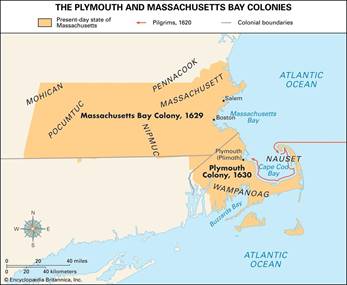
Between 1620 and 1640, approximately 13,000 Puritans emigrated to North America in what historians call the Great Migration. Unlike earlier colonial ventures, this migration consisted largely of entire families, signaling an intent to build permanent religious communities.
Key developments include:
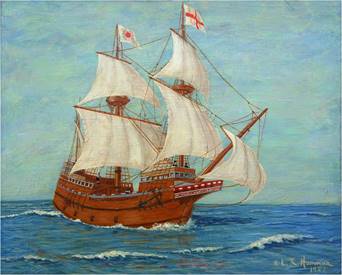
- 1620: The Pilgrims arrive aboard the Mayflower and establish Plymouth Colony
- 1629: Charter granted to the Massachusetts Bay Company
- 1630: Leadership of John Winthrop and the “City upon a Hill” vision
- 1636: Founding of Harvard College for ministerial training
The Puritan colonies were intentional theocratic experiments, designed to model a godly society governed by biblical principles.
III. Theological Framework: Calvinism Systematized
Puritan theology was rooted in Reformed scholasticism and later summarized in the “TULIP” framework:
- Total Depravity
- Unconditional Election
- Limited Atonement
- Irresistible Grace
- Perseverance of the Saints
These doctrines were later codified in the Synod of Dort (1618–1619), which provided a formal response to Arminian theology.
Puritans believed themselves to be a visible community of the elect, though uncertainty of individual salvation led to intense introspection and moral rigor.
IV. Church and State: Theocratic Governance
Unlike later American ideals of religious liberty, Puritan colonies fused ecclesiastical and civil authority.
- Only church members could vote (Massachusetts law of 1631)
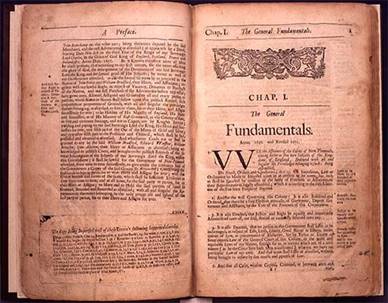
- Civil law was derived heavily from the Old Testament
- Heresy was treated as both a religious and civil crime
This system reflected medieval precedents of Christendom, though ironically enforced by those who had fled persecution.
V. Dissent and Persecution
1. Early Conflicts
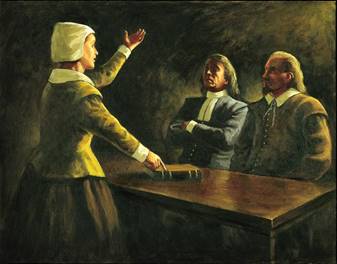
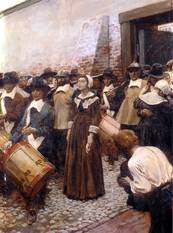
Dissent emerged almost immediately:
- Anne Hutchinson challenged clerical authority → banished (1638)
- Roger Williams advocated religious liberty → founded Rhode Island
Williams’ concept of “liberty of conscience” would later influence American constitutional thought.
2. Anti-Quaker Persecution
The treatment of Quakers stands among the most documented examples of Puritan intolerance.
Victims included:
- Mary Dyer
- William Robinson
- Marmaduke Stephenson
Executed between 1659–1661 on Boston Common, these individuals became known as the Boston Martyrs.
Legal measures included:
- Death penalty for repeated entry
- Public whipping and mutilation
- Burning of Quaker literature
Royal intervention by Charles II of England eventually curtailed executions.
3. Anti-Catholic Legislation
Anti-Catholic sentiment was widespread across the colonies, rooted in English historical conflicts such as:
- English Reformation
- Gunpowder Plot fears
- European wars of religion
Catholics were often:
- Denied voting rights
- Barred from holding office
- Restricted in worship
Historian John Tracy Ellis noted that anti-Catholicism became a defining cultural feature of early America.
VI. Slavery and Social Hierarchy
The manuscript correctly notes early Puritan involvement in slavery, though historically this requires nuance.
- Slavery existed in New England but was less economically central than in the South
- The 1641 Massachusetts Body of Liberties legalized slavery under specific conditions
- Puritans participated in the broader Atlantic slave system
This reflects a contradiction between theological ideals and social practices.
VII. Sabbatarianism and Social Control
6
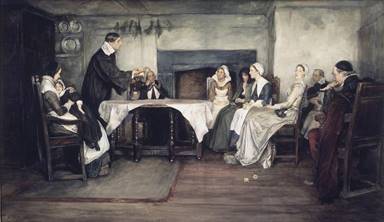
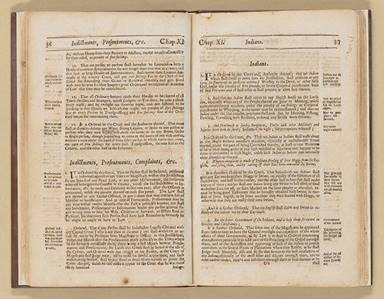
Puritan Sabbath observance was among the strictest in Christian history.
Unlike early Christian tradition (which permitted recreation), Puritans enforced:
- Mandatory church attendance
- Prohibition of all labor and leisure
- Severe penalties including whipping and death
This rigidity reflected both theological conviction and social control.
VIII. The Salem Witch Trials (1692)
The Salem Witch Trials represent the climax of Puritan religious extremism.
- Over 200 accused
- 20 executed
- Spectral evidence accepted in court
Historians attribute the hysteria to:
- Religious anxiety
- Frontier instability
- Social tensions
The trials ultimately discredited theocratic governance.
IX. Christmas Ban and Cultural Conflict
Puritan hostility toward Christmas stemmed from:
- Its association with Catholic liturgy
- Concerns over excess and disorder
From 1659–1681, Christmas was banned in Massachusetts.
This reflected broader efforts to eliminate:
- Liturgical calendars
- Feast days
- Traditional celebrations
X. The Irish, Cromwell, and Transatlantic Conflict
The manuscript references the impact of Oliver Cromwell and the Irish Rebellion of 1641.
Modern scholarship clarifies:
- Atrocities occurred on both sides
- Cromwell’s campaign (1649–1653) was particularly brutal
- Irish forced migration and indentured servitude did occur, though often conflated with chattel slavery
XI. Gradual Decline of Puritan Dominance
By the early 18th century, Puritan control weakened due to:
- Royal intervention
- Economic diversification
- Religious pluralism
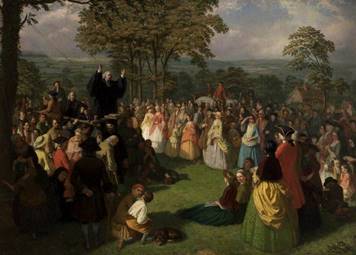
- The First Great Awakening
The rigid Puritan system gave way to broader Protestant diversity and eventually to American religious freedom.
XII. Conclusion: Historical Assessment
Puritanism presents a profound historical paradox:
- It sought religious freedom yet enforced religious uniformity
- It emphasized divine grace yet practiced harsh legalism
- It contributed to American identity while opposing core American freedoms
Its legacy is therefore both foundational and cautionary.